Jump to a section +
Choose the San Diego journey before the visual theme
Sun, coast, and skyline imagery can establish place, but they do not tell a resident whether service is available, a traveler whether an experience fits the trip, a military family whether a process understands its timing, or a technical buyer whether a team can perform. The San Diego website design overview should begin with the most important real audience and give other qualified audiences clear entrances. One generic “live, work, play” message flattens decisions that need different evidence, timing, and contact.
Four San Diego journeys require four information orders
| Journey | First decision | Proof and action |
|---|---|---|
| Immediate local service | Is this the exact service, at my address or area, within the stated hours and current operating limits? | Local work, team, credentials, price or estimate policy, call or short request, and confirmation |
| Visitor planning | Will this place, event, activity, stay, or service fit my date, party, location, budget, and access needs? | Current availability, representative media, policies, directions, accessibility, booking, and support |
| Military-connected need | Does the business provide a specific relevant service or opportunity without implying government affiliation or special access? | Eligibility, documents, timelines, location or installation boundary, responsible contact, and verified credentials |
| Innovation or trade evaluation | Does the company have the technical capability, people, quality system, security posture, capacity, and commercial fit? | Detailed capabilities, evidence, standards, publications, projects, stakeholders, and qualified inquiry |
Build the local-service route for an immediate decision
The six-screen local service test
Name the need
Use the customer's service or problem language without diagnosing, exaggerating urgency, or hiding important exclusions.
Confirm the area
Distinguish city, community, nearby municipality, county, route, and project territory before the visitor submits.
Set availability context
State hours, same-day or after-hours definition, booking status, response process, and what the action does not guarantee.
Show relevant proof
Use real nearby work, people, licenses, reviews, vehicles, facilities, equipment, and process evidence tied to the service.
Frame price or scope
Explain starting price, diagnostic charge, estimate method, project factors, fees, or why inspection is necessary.
Confirm the action
Make call, appointment, estimate, or request usable on mobile and route it to a monitored operational owner.
Do not publish “serving all San Diego County” when the company means certain planned jobs or account types. A customer reading that phrase may expect routine availability far beyond the City of San Diego. Use a service-by-area matrix and explain travel charges, route days, minimums, site constraints, or municipal limits when they affect the decision. If an address checker is used, keep it accessible, avoid retaining rejected addresses unnecessarily, and provide a human alternative when a boundary is unclear.
Give visitors certainty before they arrive
Visitor pages should answer planning questions, not merely inspire
| Planning question | Current information | Action design |
|---|---|---|
| Is it available? | Dates, hours, season, capacity, blackout periods, reservation status, and update time | Book, join a waitlist, request, or choose an alternative without false scarcity |
| Where is it? | Complete address, city, map, entrance, parking, transit, pickup point, and realistic travel context | Open directions while retaining text details and a contact number |
| What does it cost? | Current price, taxes or fees, deposits, inclusions, optional charges, cancellation, and refund terms | Show material terms before payment or personal-data collection |
| Will it fit our group? | Age, ability, size, attire, equipment, language, health or safety limits, and accommodation process where relevant | Ask a monitored fit question without requiring unnecessary sensitive information |
| What happens if plans change? | Weather, operator cancellation, rescheduling, late arrival, no-show, transfer, and support policies | Provide a self-service or human change path connected to the reservation |
The San Diego Tourism Authority publishes current industry research and visitor information. Those sources can establish that visitor markets matter regionally, but a business should not turn a regional statistic into its own demand forecast, ranking, or result claim. Use visitor research to identify questions, then verify the company's own seasonality, booking windows, cancellations, source markets, accessibility requests, and support issues. Date-sensitive facts need a source and owner. An “open daily” statement can become more damaging than an old photograph.
- Show the actual property, room, product, activity, vehicle, route, view, food, staff, and access conditions a visitor is likely to encounter.
- Label sample itineraries, seasonal offerings, representative rooms, similar equipment, and archived events so inspiration does not become an availability promise.
- Keep booking provider, total price context, taxes or fees, confirmation owner, cancellation, support, and third-party terms visible before handoff.
- Provide captions, transcripts, image alternatives, keyboard controls, zoom support, and reduced-motion behavior across galleries, maps, calendars, and checkout.
- Offer directions and timing in text rather than assuming a visitor already understands local communities, highways, transit, bases, coastlines, or municipal boundaries.
- Remove old promotions, unavailable packages, closed locations, expired event pages, and discontinued booking links through a documented redirect and archive process.
Use military-connected language only when the connection is real
Commander, Navy Region Southwest maintains official information for installations that include Naval Base San Diego, Naval Base Coronado, and Naval Base Point Loma. That public presence supports a market-research fact, not a private company's affiliation. Military-connected audiences can include active-duty members, civilian employees, veterans, families, contractors, suppliers, applicants, and institutions with very different needs. Never use a Navy seal, installation photograph, rank, uniform, or base name to imply endorsement, access, veteran ownership, contracting status, or customer history without authorization and precise context.
Separate military-connected journeys by actual relationship
| Relationship | Website content that may help | Boundary to state |
|---|---|---|
| Consumer or family | Eligibility, schedule flexibility, relocation or deployment-aware process, documents, location, discounts with exact terms, and support | No guarantee of reimbursement, installation access, command approval, benefit eligibility, or outcome |
| Veteran-owned business claim | Owner identity, exact current certification or self-description, issuing program, scope, and verification link where appropriate | Do not equate veteran ownership with federal contract status or endorsement |
| Government contractor or supplier | Actual registrations, contract vehicles, codes, clearances, standards, past performance, capabilities, and procurement contact | Disclose only approved information and distinguish eligibility from an awarded contract |
| Installation service | Access responsibility, scheduling, escort, insurance, security, delivery, crew, and equipment process approved for the work | Do not promise base access or use an installation as an ordinary public service area |
| Employment applicant | Role, work location, citizenship or clearance requirements only when lawful and job-related, accommodations, and authorized application route | Keep sensitive applicant and clearance information out of a public contact form |
Give innovation and trade buyers a deeper evidence layer
The City of San Diego's focused economic-development strategy identifies trade, manufacturing, military, tourism, science, and technology as meaningful parts of the economy. A company should select only the sector language its capabilities and customers support. A life-science supplier, marine-technology firm, software company, manufacturer, logistics provider, and professional adviser need different proof. Do not publish “innovation” as a substitute for product definition, technical people, standards, validation, intellectual-property boundaries, procurement fit, or a commercial model.
Structure a serious capability page
Define the application
State the problem, customer, environment, use case, input, output, and important conditions in plain language.
Show technical depth
Name responsible people, facilities, tools, methods, standards, quality controls, and regulatory context the company can substantiate.
Separate current from planned
Distinguish released, validated, certified, piloted, prototype, research, roadmap, and custom capabilities.
Prove a representative outcome
Explain scope, baseline, company role, measurement, period, limits, and permission without revealing confidential information.
Support stakeholder review
Provide accessible documents, citations, security or compliance contacts, procurement details, and a stable shareable URL.
Qualify the conversation
Ask for application, organization, stage, requirements, timing, and safe contact; move sensitive exchange to an approved system.
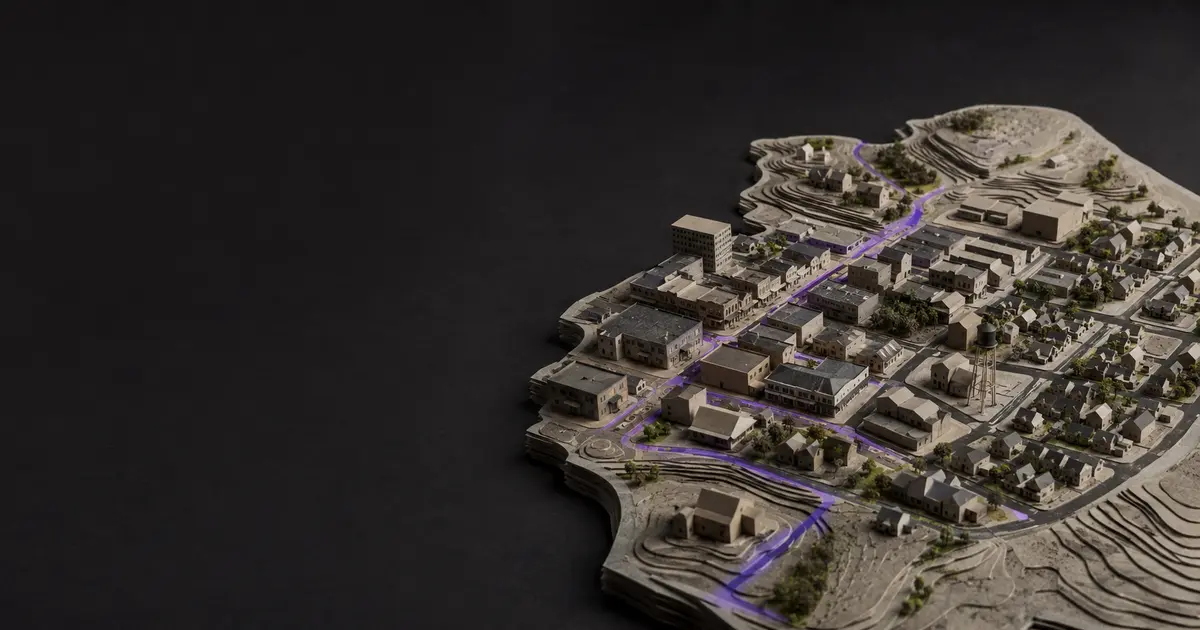
Shared identity and values can support several audiences, but the route to confidence changes with the buyer's clock and risk.
Define city, county, community, and cross-border claims
Geography labels need operating definitions
| Label | What the website must clarify |
|---|---|
| City of San Diego | Eligible services, communities, hours, location or dispatch base, response process, and exclusions within city limits |
| San Diego County | Which municipalities or unincorporated areas qualify, service or project thresholds, travel terms, teams, and current capacity |
| Community or planning area | Whether the name follows an official city planning boundary, an operational zone, or a commonly used label and why it matters |
| Military installation | Contract, eligibility, access, delivery, escort, schedule, security, and affiliation boundaries for actual authorized work |
| Cross-border | Legal entities, countries, languages, currency, customs, tax, delivery, data, licensing, support, and professional advice required |
| Regional remote service | Which deliverables are remote, where in-person work occurs, time-zone coverage, tools, security, and contact ownership |
San Diego's Open Data portal publishes current community-planning boundaries and other city datasets. Use official maps to check names and jurisdictions, but do not treat a planning boundary as a service territory automatically. A cross-border claim requires even more restraint: proximity to Mexico does not prove the company can contract, deliver, advise, transfer data, employ, ship, or provide regulated work across the border. Publish only the exact capability qualified legal, tax, customs, privacy, licensing, and operational reviewers approve.
Build navigation around switching buyer modes
A company serving more than one San Diego audience should not make the main menu a list of internal departments. The small-business website navigation guide helps organize entrances around what visitors need to do. A local consumer may start with Services and Areas. A visitor may start with Plan Your Visit or Book. A technical buyer may start with Capabilities or Industries. A military-connected page may live under the relevant service, careers, ownership, or government section instead of becoming a vague top-level identity.
- Keep the primary navigation compact and place audience choices only when they lead to meaningfully different content systems.
- Preserve service, location, date, property, product, or capability context as the visitor moves into booking, inquiry, application, or a third-party tool.
- Use breadcrumbs and related links to show hierarchy without creating circular trails among dozens of city, community, and industry pages.
- Give search, filters, menus, calendars, maps, and portal links accessible labels, keyboard behavior, visible focus, useful empty states, and mobile controls.
- Keep a human phone or contact alternative visible when an external reservation, portal, application, payment, or document system fails.
- Measure completed journeys and misroutes by audience; a high click count may reveal confusion rather than successful navigation.
A professional website design service should create shared components for locations, proof, credentials, policies, schedules, and calls to action while letting each audience receive a different order. It should also define content ownership: who changes visitor availability, who confirms service coverage, who approves military-connected language, who maintains technical claims, and who monitors forms. A flexible system is not a universal template. It is a governed set of fields and layouts that prevents one audience's urgent change from breaking another audience's page.
Use San Diego imagery as evidence, not default sunshine
Document rights, releases, locations, dates, captions, confidentiality, trademark use, and expiration for every important asset. Optimize responsive size, format, dimensions, loading priority, alt text, captions, transcripts, controls, and reduced motion. A visitor page may need a rich gallery; an urgent local page may need only one useful image. A technical page may rely on an exact diagram or table instead of decoration. Never publish export-controlled, confidential, patient, resident, guest, child, badge, license-plate, or site-security information without the responsible review.
Treat accessibility and privacy as journey requirements
Apply safeguards to the transaction that matters
| Journey | Accessibility test | Data boundary |
|---|---|---|
| Local request | Address, service choice, phone, form, validation, confirmation, and urgent alternative work with keyboard, zoom, and assistive technology | Collect minimum contact and service context; keep sensitive details out of general lead tools |
| Visitor booking | Dates, party size, price, policies, gallery, maps, checkout, cancellation, and support remain usable | Identify booking and payment providers, choices, retention, account needs, and confirmation ownership |
| Military-connected process | Eligibility, documents, discount, location, application, and contact do not depend on inaccessible PDFs or imagery | Do not request identification, orders, clearance, benefits, or protected documents until an approved process needs them |
| Technical inquiry | Capability data, tables, documents, diagrams, video, and forms have semantic structure and alternatives | Move confidential specifications, controlled data, intellectual property, and procurement files into a reviewed exchange |
The California Attorney General's CCPA resources explain rights that apply to covered businesses and data practices; qualified reviewers should determine coverage and implementation. Do not call the website “CCPA compliant” because it has a banner. Inventory analytics, advertising, maps, chat, recordings, forms, booking, payments, CRM, hiring, portals, uploads, and vendors. Configure applicable notices and choices, minimize collection, honor relevant browser signals and requests where required, limit access and retention, and test incident procedures. Accessibility and privacy both fail most often at third-party handoffs.
Create local search authority without cloning communities
Decide whether a San Diego local page deserves publication
Verify the geography
Identify city, municipality, county, community, planning area, installation, or informal name and use the correct public boundary.
Verify operations
Confirm service, customer, location, team, route, hours, project threshold, and current capacity for that place.
Find unique evidence
Gather approved work, people, photographs, reviews, questions, logistics, policies, and useful authoritative sources.
Find a changed decision
Document a difference in eligibility, timing, access, price, regulation, experience, proof, or contact.
Choose the right container
Use a page only when needed; otherwise prefer a coverage table, location component, service section, filter, or FAQ.
Maintain or retire
Assign review, track usefulness, and consolidate weak pages with direct redirects and updated internal links.
Census QuickFacts and city open data can raise questions about language, disability, broadband, transportation, businesses, housing, and community boundaries. They do not define an individual customer or prove demand for this company. Pair dated public estimates with analytics, calls, bookings, CRM outcomes, accessibility feedback, customer research, and community relationships. Publish a translated page, transit note, visitor guide, or community service page only when a real user need and maintenance owner support it. Avoid demographic targeting and broad claims about how a community behaves.
The local city and state guide hub can help compare page systems, but San Diego needs its own audience boundaries. Search and AI systems should find consistent visible facts across the website, maps, directories, booking platforms, business records, credentials, citations, reviews, and independent references. Do not mark up fake branches, treat the entire county as one location, repeat community names in alt text, or create military and innovation pages merely to capture terms. Relevance comes from a real offer and evidence graph.
Assign ownership by journey
The person closest to the promise should verify it
| Content | Accountable reviewers | Change trigger |
|---|---|---|
| Local service and coverage | Operations, dispatch, location leads, sales, and credential owner | Area, service, staffing, price, availability, license, or contact change |
| Visitor information | Property or experience operations, booking, guest support, and policy owner | Hours, season, capacity, price, package, access, weather, provider, or policy change |
| Military-connected content | Relationship owner, legal, procurement, HR, security, trademark, and customer approver where needed | Certification, contract, access, discount, base, role, clearance, or permission change |
| Innovation and trade claims | Technical, quality, regulatory, security, commercial, and communications leads | Product, validation, standard, publication, facility, project, customer, or roadmap change |
| Accessibility and privacy | Accessibility, privacy, security, legal, development, analytics, and vendor owners | New page, component, integration, data use, complaint, incident, law, or vendor change |
Can one San Diego website serve local and visitor audiences?
Yes, when navigation gives each a clear entrance. Local customers need service area and current action; visitors need date-sensitive planning and booking. Share brand and location facts, but do not force both through one generic page.
Should a business create military pages because San Diego has Navy installations?
No. Publish military-connected content only for a real service, ownership, certification, employment, contract, supplier, relocation, discount, or authorized installation relationship. State the exact context and avoid any implied government endorsement or access.
Is serving San Diego the same as serving San Diego County?
No. Define the City of San Diego, independent municipalities, unincorporated areas, communities, installations, and any wider project territory separately. Coverage may also differ between routine service, visitor activity, and planned commercial work.
What should a San Diego innovation company show on its website?
Define applications, current maturity, technical people, facilities, methods, quality controls, standards, validation, publications, representative projects, security or regulatory context, commercial model, and a qualified contact without exposing protected information.
Do beach and skyline images help San Diego local SEO?
They may communicate place but do not prove service or authority. Original work, real locations, accurate coverage, current credentials, useful community information, independent reviews, consistent listings, and earned local references provide stronger relevance.
Evidence behind the guide
Sources and further reading
- Focused Economic Development StrategyCity of San Diego
- Open Data PortalCity of San Diego
- San Diego Tourism Industry ResearchSan Diego Tourism Authority
- Commander, Navy Region SouthwestUnited States Navy
- California Consumer Privacy ActCalifornia Department of Justice
- QuickFacts: San Diego city, CaliforniaU.S. Census Bureau
Continue on Web Respawn
Pages that actually connect to this decision.
These links are selected for the subject of this guide. They are not a generic service dump.
Explore the strategy, content, design, build and launch foundation.
Open page ↗RELEVANT PAGEWebsite Design in SAN Diego, CAContinue to the dedicated local-market page and its researched service context.
Open page ↗RELEVANT PAGEWebsite Design by MarketExplore researched city and state website-design pages.
Open page ↗RELEVANT PAGEGoogle Business ProfileKeep local business details, services and website signals aligned.
Open page ↗