
Restaurant website design
Before the first bite,
the first click.
Web Respawn designs restaurant websites that make the menu, hours, ordering and reservations easy to find—on the phone in your guest’s hand.
Make the first visit easier
The menu.
The hours.
The right link.
Let your food, space and story set the mood. Keep the practical details just as easy to enjoy.

Four questions that shape the website
Help guests make
their next move.
- What can I order?
- A current web menu, clear prices and readable descriptions. Give the menu a direct place in the navigation.
- Are you open?
- Easy-to-find hours, holiday changes and the correct location. Keep the website and public listings consistent.
- Can I book?
- Show whether you accept reservations and where to make one. Keep ordering and event inquiries distinct.
- Where do I go?
- A real address, directions and useful parking details. Make the call and map links easy to tap.
A focused restaurant website
Good atmosphere.
Clear information.
Start with the pages your guests need. Add depth for the offers and locations your restaurant actually has.
Explore the page plannerA menu people can actually read
Make menu sections, items and prices readable on a phone. Publish only restaurant-approved dietary notes, and agree who keeps changes current. Menu categories usually belong together on one useful page.
The tools your restaurant already uses
Connect ordering, reservations and gift cards to the correct live destination. Label pickup, delivery and reservations clearly, and keep location-specific links with the right restaurant.
A real place, with accurate details
Keep the address, current hours, phone number and useful parking or access notes easy to find. Additional physical locations need their own accurate details and ordering paths.
Room for catering and private dining
Add a focused page when the restaurant offers catering, private dining or events. Give guests useful scope and a short inquiry path with event type, date and guest range.
Real Web Respawn work
A local studio.
A clear way to book.
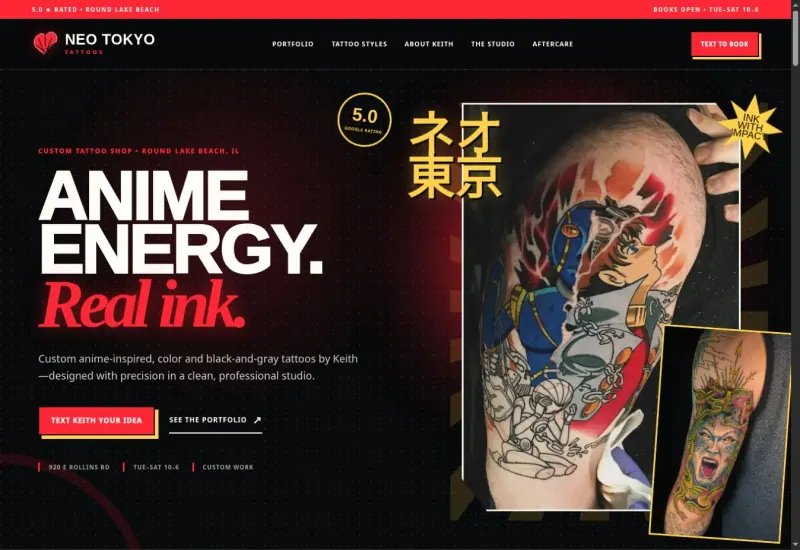
Neo Tokyo’s website connects the artwork, the studio and a direct text-to-book action. It’s one example of how we build a website around a real business and its next step.
Explore the Neo Tokyo projectReady for the next service
Keep the details
in good hands.
Before launch, we check the menu, mobile calls, location links and ordering or reservation handoffs. We also agree who manages menu changes, holiday hours and ongoing website updates.
Website design + required Care
A clear place
to start.
A focused website for your restaurant, with a written scope for your menu and guest experience.
$2,500
starting build price$199/mo
required Care from$199/month for 12 months
Starting first-year total: $4,888.
Before we begin
A few things you
might be wondering.
Can you redesign our current restaurant website?
Yes. We review the current menu, useful URLs, location details and ordering or reservation paths before planning the redesign. Existing links should keep reaching relevant pages, with direct redirects for necessary changes.
Can we keep our ordering and reservation tools?
Yes. Your website can connect guests to the platforms you already use. We plan clear links to the correct location and menu, then test the handoff. The platform continues to handle ordering or live reservation availability.
Should our menu be a PDF?
Use a readable web menu first, with current items, prices and restaurant-approved dietary notes. A downloadable PDF can remain a secondary option. Guests should not have to download a file or pinch an image to read the menu.
How will menu and opening-hour changes be handled?
We agree the editing and update workflow in the written project scope, including who supplies approved changes and who publishes them. Required Website Care supports the site after launch; the selected plan defines ongoing updates and support.
Do we need pages for nearby towns?
A single restaurant generally needs one strong location page with its real address, hours and visit details. Separate physical restaurants can each have a useful page. Catering coverage belongs with the real catering offer.
Let’s talk about your restaurant
Your next chapter
starts here.
Bring your menu, photography and current ordering or reservation links. We’ll discuss the guest experience and recommend a written website scope.
hello@webrespawn.com