Include searches close to a real service decision.
Start with services, markets and qualifiers the business can support profitably.
 Contact
Google Search Ads management
Web Respawn connects high-intent searches to an honest ad promise, a relevant landing path and a call or form the business can evaluate. Click volume is context—not the primary outcome.
The search decision
Start with services, markets and qualifiers the business can support profitably.
Negative terms, service boundaries and location rules protect the approved budget.
The landing page should explain fit, proof and one clear next action without changing the promise.
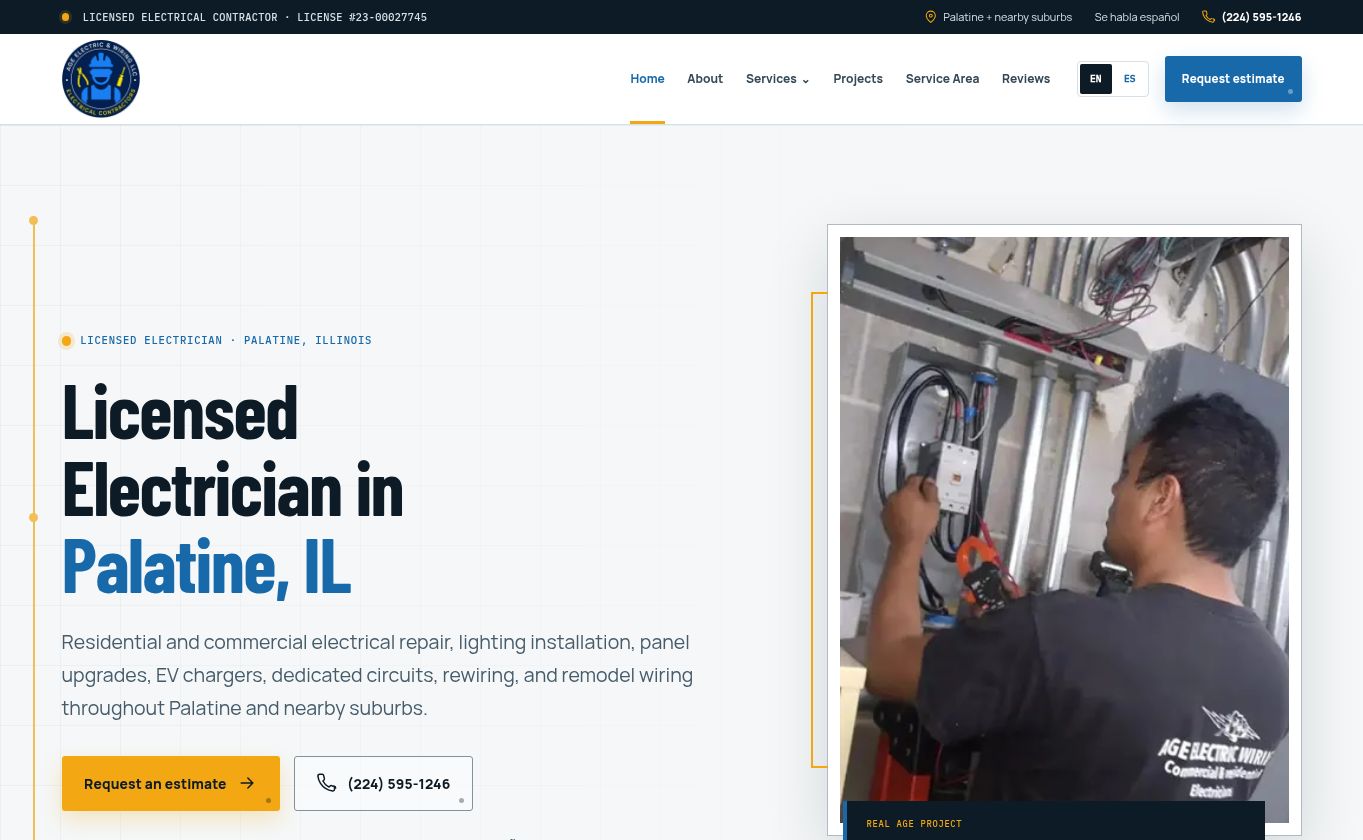
Proof with a boundary
AGE Electric demonstrates a real Web Respawn website with distinct service paths, bilingual coverage and direct estimate actions. It is presented as landing-path evidence—not as a paid-search case study or lead-volume claim.
Inspect the website redesignSearch to response
Name the service, market, customer action and disqualifying conditions before tracking is configured.
Separate the business-approved Google budget, management scope and any website work in writing.
Confirm targeting, exclusions, account ownership and measurement before spend begins.
Use search terms and supported call or form outcomes—not impressions alone—to guide changes.
Commercial clarity
Before the first click
The useful starting budget depends on search volume, competition, service value, geography and the business's capacity. Web Respawn reviews those inputs before recommending a range.
Yes. Account ownership, history, tracking, search terms, destinations and change records should be reviewed before the structure is changed.
No. Destination review is part of campaign planning. Any new landing page or material website change is a separate written scope.
Supported qualified calls, forms or bookings and the cost per useful opportunity matter more than clicks alone. The business remains responsible for sales follow-up.
Start with fit